

Last updated: October 23, 2026
Stone Mountain Park is a 3,200-acre park in DeKalb County, about 15 miles east of downtown Atlanta, built around a single enormous dome of rock that rises to 1,686 feet. It is Georgia’s most visited attraction, and most of those visitors never hike it. That is a mistake, because the hiking is the best thing here: a one-mile climb straight up bare granite to the summit, a five-mile loop around the base, and a tangle of short forest trails, all of it reachable with nothing more than the park’s parking pass. This guide covers the dome itself, what it really costs to hike, and which trail deserves your morning.
The Dome First
Stone Mountain is a quartz monzonite dome, a monadnock: a lone mountain of hard rock left standing while everything softer around it eroded away. It is usually called granite, and you will hear it introduced as “the largest exposed piece of granite in the world.” That second claim is a boast the park has repeated for decades; larger exposed granite landscapes exist elsewhere, and the honest version is impressive enough without it. The dome stands about 825 feet above the surrounding land, runs more than five miles around at its base, and its bare summit is big enough to feel like another landscape entirely, all sloping rock, wind, and long views back to the Atlanta skyline.
You will also see the carving. The north face carries the largest bas-relief artwork in the world, depicting Confederate figures Jefferson Davis, Robert E. Lee, and Stonewall Jackson, completed in the early 1970s after the state bought the mountain in 1958 as a Confederate memorial; the park opened in 1965. It is part of what this place is, it is contested, and the park’s own exhibits tell that history in more depth than a hiking guide can. You see it best from the Skyride and the summit overlooks, and then the trails take you on to everything else the dome has to offer.
Getting There and What It Costs
The drive is simple: I-285 to Exit 39B, then US-78 East (the Stone Mountain Freeway) straight to the park gates at 1000 Robert E. Lee Blvd. From downtown or Midtown it is roughly 25 to 40 minutes outside rush hour; from Decatur, half that. MARTA rail does not reach the park, so the transit version is train to Avondale or Kensington station plus a rideshare for the last stretch. The park gates are open daily from 6 a.m. to midnight; the paid attractions inside keep their own hours, which vary by season, so check the park calendar for the day you are going.

Now the cost decision, because this is where most guides blur two different numbers into one. Hiking costs only parking. A daily parking pass is $25 per vehicle (an annual pass is $40), and that pass is your ticket to every trail in this guide: the Walk-Up, the Cherokee loop, all of it. The separate Attractions Pass, around $39.95, covers the theme-park side of the property (the Skyride, the train, the seasonal shows and festivals). Plenty of visitors buy it and enjoy it, but nobody needs it to hike, and if you are coming two or three times in a year, the $40 annual parking pass pays for itself on the second visit. Confirm current prices on the park’s site before you go; fees change.
The Three Hikes, by Effort
| Trail | Distance | Effort | Time | Dogs |
|---|---|---|---|---|
| Walk-Up Trail | 1 mile one way, 786 ft up | Strenuous | ~30 min up | Not allowed |
| Cherokee Trail | ~5 miles, loop | Moderate | 2–2.5 hours | On leash |
| Nature Garden Trail | 3/4-mile loop | Easy | 30 min | On leash |
| Songbird Habitat Trails | Two 1-mile loops | Easy | 30–45 min | Not allowed |
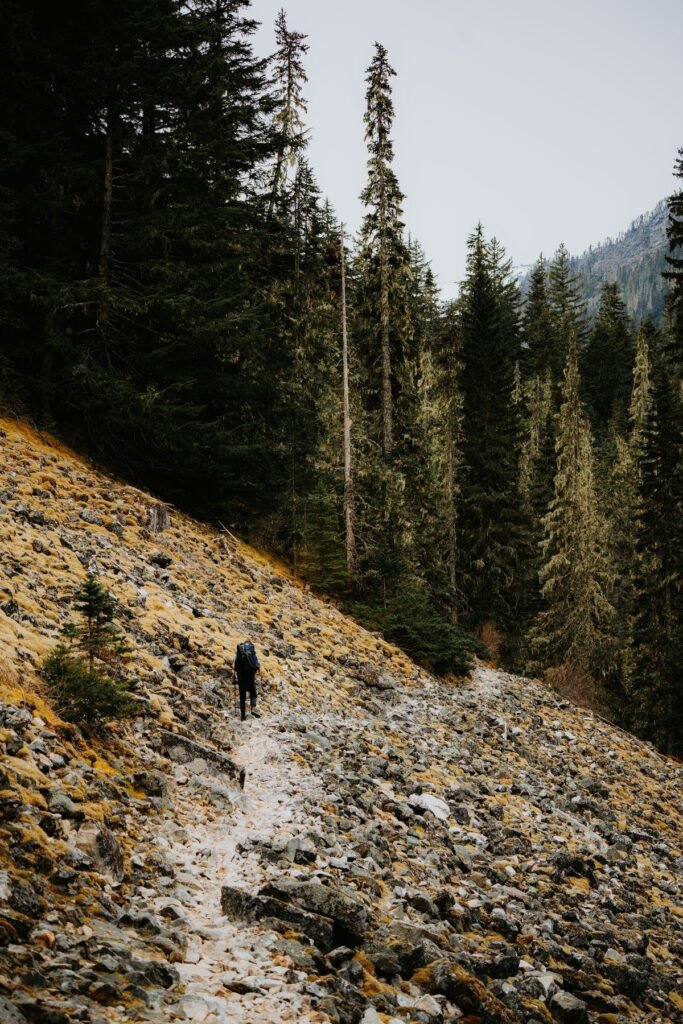
The Walk-Up Trail is the summit hike and the reason to come. One mile, yellow-blazed, climbing 786 feet up the west side of the dome on bare rock tread, in full sun the whole way. The park calls it very strenuous and means it: at a steady pace it takes about half an hour up, and the granite is extremely slippery when wet, so the park’s advice is simply not to climb it in the rain. (If a trail app shows 2.2 miles for the Walk-Up, that is the round trip, up and down.) Two rules surprise people: no dogs on the Walk-Up, ever, and no shade near the top, so water and a hat are equipment, not comforts.
The Cherokee Trail is the base loop: about five miles circling the mountain through oak-hickory forest, past Stone Mountain Lake, the Grist Mill, and the covered bridge. It is the hike to bring the dog on (leash required) and the one that shows you how much park exists beyond the dome. Save a little care for the last mile, which turns steep and rocky and, like all the granite here, gets slick when wet. The Walk-Up connects to the Cherokee, so a summit-plus-loop day of about six miles is there if you want it.
For an easy half-hour, the Nature Garden Trail loops three-quarters of a mile through mature forest with interpretive signs for the native plants, and the Songbird Habitat Trails offer two gentle one-mile loops, one through open field for birding and one through shaded woodland (no dogs on the Songbird trails, to protect nesting birds). Eight short connector trails stitch the system together; the park counts about 15 miles of hiking and walking trails in total. Our Georgia hiking guide puts Stone Mountain in context with the rest of the state’s trails.
The Combo Most Guides Get Wrong
“Hike up, ride down” sounds like the perfect Stone Mountain plan, and it nearly is. The Summit Skyride gondola does carry you between the summit and its base station, so riding one direction is a real option. What most guides leave out is the geography: the Walk-Up Trail climbs the west side of the dome, and the Skyride base sits on the north side, about 1.3 miles apart by road and trail. So hike up and ride down works, but you finish the ride a 1.3-mile walk from your car at the Walk-Up trailhead. Plan for that walk (it is flat and easy, just not zero), or do the tidy version: park once, Walk-Up to the top, and Cherokee Trail back around the base to your car, all on foot, no ticket beyond parking. Skyride hours are seasonal, so if the gondola is part of your plan, check the park calendar for your day before you count on it.
When to Go, and When Not To
Granite sets the rules here. The dome reflects heat and offers almost no shade, so a summer Walk-Up at noon is a genuinely gruelling mile; start before 10 a.m. in summer, carry two to three litres of water per person, and wear shoes with real grip. Wet granite is the other hard rule: rain, or even sand and pine needles scattered on the smooth rock, turns the tread into a slide, and falls on granite are unforgiving. If a thunderstorm builds, get off the dome; there is no shelter up there and the summit is the highest point for miles. Winter flips the problem: watch for ice on the exposed rock on the coldest mornings.
Timing shapes the crowds, too. Stone Mountain is an easy drive for millions of people, so weekend middays and festival weekends (the park runs seasonal festivals much of the year) are the busy version. Weekday mornings are the quiet one. And if the dome leaves you wanting the bigger mountains, the full trips are close: Blue Ridge and Helen are each about two hours north, which is exactly the contrast that makes Stone Mountain useful. It is the hike Atlanta can do before lunch.
Frequently Asked Questions
Where is Stone Mountain, Georgia?
In DeKalb County, about 15 miles east of downtown Atlanta, roughly 25 to 40 minutes by car outside rush hour. The park address is 1000 Robert E. Lee Blvd, Stone Mountain, GA 30083.
Is Stone Mountain in Atlanta?
No. It sits in its own city and park in DeKalb County, inside metro Atlanta but outside the City of Atlanta itself.
How long is the Stone Mountain Walk-Up Trail?
One mile one way, climbing 786 feet, per the park’s official hiking page. Most people take about 30 minutes going up. The 2.2-mile figure on some trail apps is the round trip.
How much does it cost to hike Stone Mountain?
A parking pass: $25 per vehicle for the day, or $40 for an annual pass. That covers every trail. The Attractions Pass (around $39.95) is a separate ticket for the park’s attractions and is not needed to hike. Check current prices before you go.
Can you bring a dog to Stone Mountain Park?
Yes, on paved trails, wooded trails, and the Cherokee loop, on a leash. Dogs are not allowed on the Walk-Up Trail or the Songbird Habitat Trails, or in the attractions, festival, and Memorial Lawn areas.
Can you walk up and ride the Skyride down?
Yes, but the Skyride base is on the north side of the dome and the Walk-Up trailhead is on the west side, about 1.3 miles apart. Budget for that walk, or loop back on the Cherokee Trail instead.
Is Stone Mountain a real mountain?
It is a quartz monzonite dome (a monadnock) rising to 1,686 feet, about 825 feet above the land around it. It is commonly called granite, and often called the largest exposed granite in the world, a long-repeated boast that does not hold up, though the dome is genuinely enormous.


, Cherokee loop, easy trails, parking vs attractions cost, and the Skyride combo.)