

Editorially reviewed by: Maaz Basharat, Founder and Managing Editor
Last reviewed: August 2026
The best hiking dogs are healthy, trainable and physically suited to the trail, not simply members of a particular breed. Labrador Retrievers, Golden Retrievers, Australian Shepherds, Border Collies, Australian Cattle Dogs, German Shorthaired Pointers and Vizslas are often strong candidates for active owners.
Breed can suggest likely energy, coat and working style, but it cannot guarantee hiking ability. A trained mixed-breed dog with suitable fitness may be a better trail partner than an unconditioned purebred dog from a breed known for endurance.
For most people, the practical choice is a dog whose normal energy level matches their everyday lifestyle, not just their occasional hiking plans. Before attempting a long or strenuous route, consider the dog’s age, health, behavior, weather tolerance and emergency carry-out plan.
Editorial Note: How This Guide Was Prepared
This is a research-led guide based on documented breed characteristics and guidance from veterinary, land-management and responsible dog-ownership organizations. Mountainer Journey does not claim that the breeds discussed were personally owned, trained or taken hiking by the editorial team, and breed traits are not guarantees about an individual dog’s health, behavior or trail ability.
This article provides general planning information and does not replace veterinary advice. Puppies, senior dogs and dogs with breathing, heart, joint, weight or other health concerns may need veterinary guidance and a modified activity plan. Trail rules and pet-access policies can change, so confirm current requirements with the official land manager before leaving home.
Best Dog Breeds for Hiking at a Glance
The following breeds are not ranked scientifically. The table compares likely strengths and limitations to help owners make a more informed choice.
| Breed | Best fit | Main caution |
| Labrador Retriever | Versatile active households | Fitness, weight and joint health |
| Golden Retriever | Social, trainable day hikes | Heat, coat and joint concerns |
| Australian Shepherd | Frequent challenging outings | High daily activity needs |
| Border Collie | Training-focused active owners | Intense drive and sensitivity |
| Australian Cattle Dog | Rugged routes and experienced handlers | Strong working drive |
| German Shorthaired Pointer | Faster and longer outings | Prey drive and high energy |
| Vizsla | Active close-companion hiking | Cold-weather protection |
| Standard Poodle | Athletic, trainable hiking | Regular coat maintenance |
| Siberian Husky | Cool- and cold-weather routes | Heat and leash management |
| Bernese Mountain Dog | Moderate cool-weather hikes | Size, heat and joint health |
What Makes a Good Hiking Dog?
The best dog breeds for hiking share useful tendencies, but the individual dog still needs to meet the demands of the route.
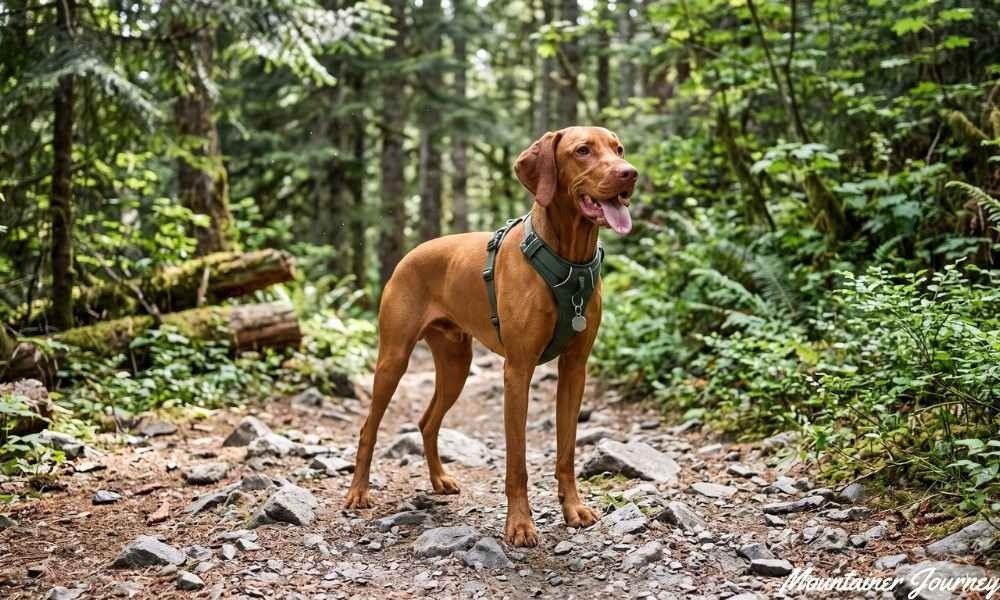
Suitable Health and Fitness
Enthusiasm is not the same as physical readiness. Some dogs will continue following their owners despite pain, overheating or exhaustion.
A suitable hiking dog should be comfortable with regular exercise and able to recover normally after shorter outings. Persistent limping, stiffness, coughing, breathing difficulty or reluctance to move requires veterinary attention rather than a harder training plan.
The National Park Service’s pet-hiking guidance recommends considering whether a pet is fit enough for the trail and consulting a veterinarian when there are concerns.
Manageable Energy
Good hiking dogs need enough energy for the intended distance, but extremely high drive can create problems if the owner cannot manage it.
A dog should also be able to slow down, wait at junctions and settle during breaks. Constant pulling, chasing or overstimulation can make a technically easy trail difficult for both dog and owner.
Reliable Training
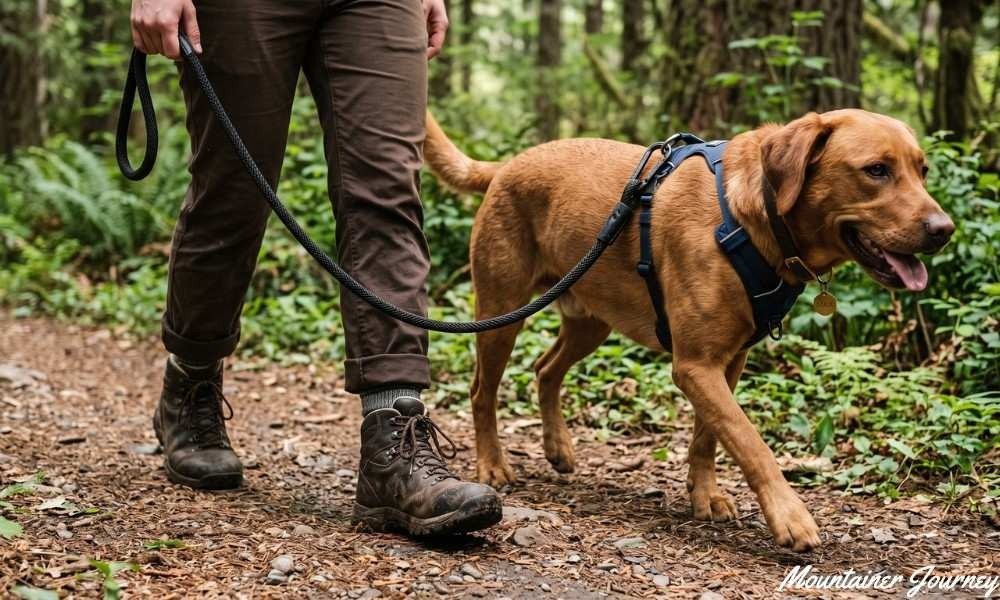
Basic cues matter more outdoors because wildlife, water, food scraps, cyclists and other dogs create distractions.
Useful trail skills include:
- Loose-leash walking
- Come
- Sit
- Stay or wait
- Leave it
- Drop it
- Easy or slow
- Quiet
- A reliable emergency recall
The American Kennel Club’s trail-training guidance recommends gradually adding distractions while practicing leash control, focus, pacing and safety cues.
A Climate-Appropriate Coat
A thick double coat may help in cold weather but make hot, humid conditions harder to manage. A short-coated dog may handle warm conditions more comfortably yet require added protection in cold or wet weather.
Coat length also affects grooming. Burrs, thorns, mud and ticks can be harder to find in dense or long fur. Choose routes and seasons that suit the individual dog instead of assuming one coat works everywhere.
Suitable Temperament
A trail-ready dog should remain manageable around strangers, children, other dogs and wildlife. A friendly dog can still cause problems by rushing toward someone frightened or walking a reactive dog.
Fearful, aggressive or highly reactive dogs may need quieter routes and professional behavioral support before using busy trails.
A Realistic Emergency Plan
Size matters when a dog becomes injured or too exhausted to continue. A large dog may have excellent endurance but be extremely difficult for one person to carry.
Before selecting a remote route, ask how the dog would be moved if it could no longer walk. An emergency carry sling, another adult and a route with accessible exit points may be more important than another piece of optional gear.
The 10 Best Hiking Dogs for Different Owners
1. Labrador Retriever — Best All-Around Choice
Best for: Active households wanting a social and versatile hiking companion
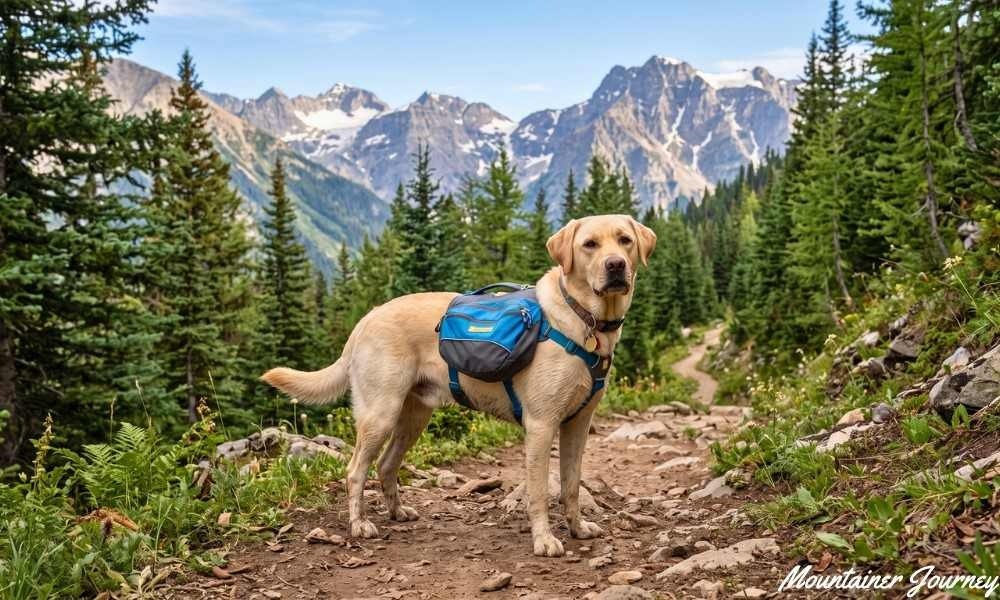
A healthy Labrador Retriever can suit many types of recreational hiking. Labs are generally active, trainable and comfortable participating in outdoor activities with their families.
Their enthusiasm can make them eager trail partners, but it should not be mistaken for unlimited endurance. Body condition, joint health, age and weather still affect how far an individual Labrador should hike.
Labs can also be strong and energetic on leash. Loose-leash training is important before introducing rocky descents, narrow paths or crowded trailheads.
2. Golden Retriever — Best for Social Day Hiking
Best for: Owners who want an affectionate and trainable companion

Golden Retrievers are frequently included among good hiking dogs because they tend to enjoy activity and working closely with their owners. Their trainability can help with leash manners, recall and calm behavior around other trail users.
Their longer coat collects mud, burrs and ticks more easily than a short coat, so post-hike checks and grooming matter. Heat, weight and joint health should also be considered when selecting distance and terrain.
A Golden Retriever that enjoys regular walks may adapt well to gradually longer day hikes, but the progression should match the individual dog.
3. Australian Shepherd — Best for Frequent Adventures
Best for: Experienced owners who hike and exercise regularly
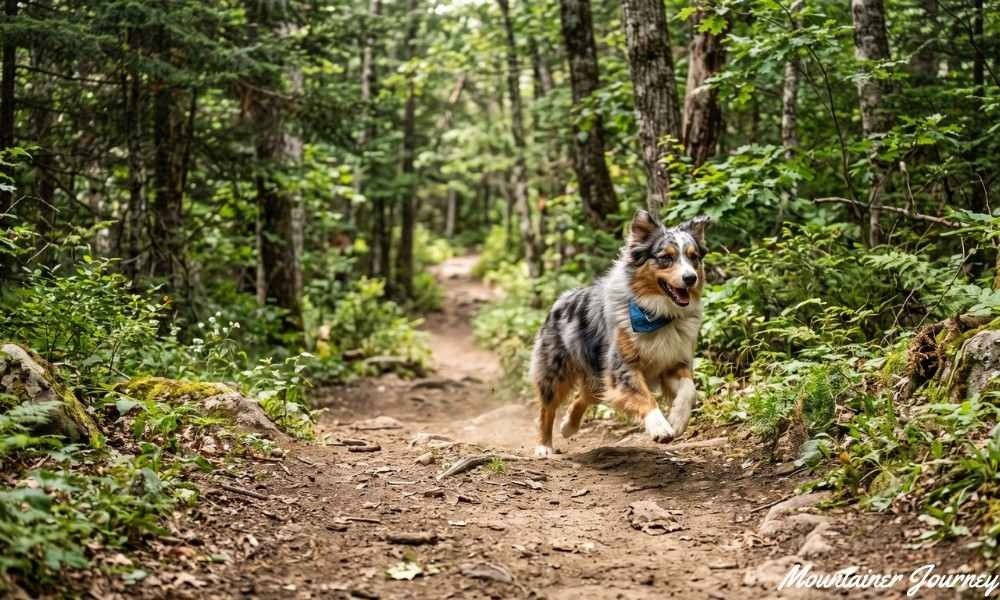
Australian Shepherds are intelligent, athletic dogs that often enjoy tasks requiring movement and attention. Hiking can provide both physical activity and mental stimulation when combined with cues, controlled breaks and varied terrain.
The main concern is lifestyle fit. An occasional weekend hike may not meet this breed’s normal activity and enrichment needs. Without suitable daily exercise and mental work, an Australian Shepherd may become restless or difficult to manage.
Their herding instincts can also affect behavior around runners, children, cyclists or animals, making early training and socialization important.
4. Border Collie — Best for Training-Focused Owners
Best for: Highly active households that enjoy structured training

Border Collies are known for intelligence, responsiveness and a strong desire to work. Those qualities can support precise leash control, pacing cues and reliable trail behavior when the owner provides consistent training.
However, intelligence does not automatically create an easy hiking companion. Some Border Collies are highly sensitive to movement, noise or unfamiliar environments. They can also require substantial mental activity away from the trail.
This breed is better suited to someone who wants training to be part of everyday life, not someone choosing a dog primarily for occasional hikes.
5. Australian Cattle Dog — Best for Rugged Routes
Best for: Experienced handlers wanting a compact, energetic working dog
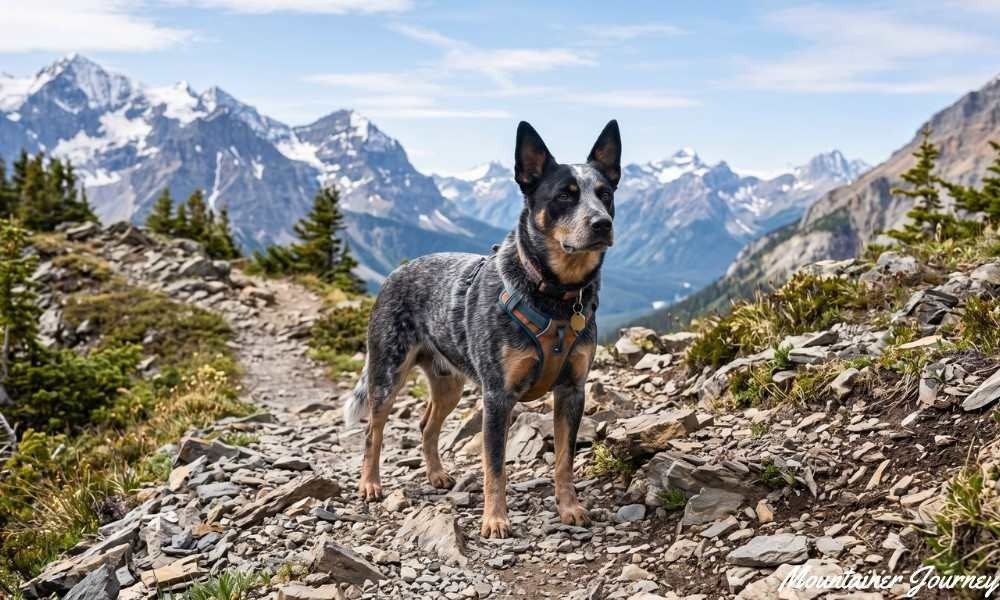
Australian Cattle Dogs are active, durable and often comfortable with demanding physical activity. Their manageable size may also make emergency assistance more realistic than with a giant breed.
Their intensity is the main tradeoff. Herding behavior, independence, protectiveness or reactivity can require careful socialization and management around other dogs and trail users.
A well-trained individual can become a capable partner on varied terrain, but this breed is not an automatic beginner choice simply because it has strong endurance.
6. German Shorthaired Pointer — Best for Faster Outings
Best for: Runners, fast hikers and consistently active owners

German Shorthaired Pointers were developed for active fieldwork and commonly have the stamina and enthusiasm associated with longer outdoor activity. Their short coat is also easier to inspect for cuts, burrs and ticks.
Their energy and prey drive require reliable leash management. Wildlife scents can be much more distracting than anything encountered during a neighborhood walk.
Owners should be prepared to provide meaningful exercise throughout the week. A demanding breed should not be selected solely for several planned hiking vacations each year.
7. Vizsla — Best for a Close-Working Companion
Best for: Active owners wanting an affectionate dog that stays involved

Vizslas are athletic, energetic and often closely attached to their owners. These qualities can make them responsive trail partners when their exercise, training and social needs are met.
Their short coat offers limited protection in cold, wet or brushy conditions. Depending on the weather and individual dog, a suitable layer may be needed during colder outings.
Vizslas also require regular companionship and activity. They are a stronger match for an active daily lifestyle than for a household expecting the dog to remain inactive between occasional hikes.
8. Standard Poodle — Best for Intelligence and Versatility
Best for: Active owners prepared for regular grooming

Standard Poodles are athletic, intelligent and highly trainable. Their responsiveness can support controlled leash walking, recall practice and calm behavior at trail junctions.
Their coat requires more maintenance than many owners expect. Burrs, seeds, mud and debris can become trapped, especially when the coat is allowed to grow longer. Post-hike inspection and routine grooming are essential.
A practical trail clip can make maintenance easier, but coat care remains part of owning this breed. Individual fitness and health still determine the appropriate hiking distance.
9. Siberian Husky — Best for Cool-Weather Hiking
Best for: Experienced owners who regularly hike in cooler conditions
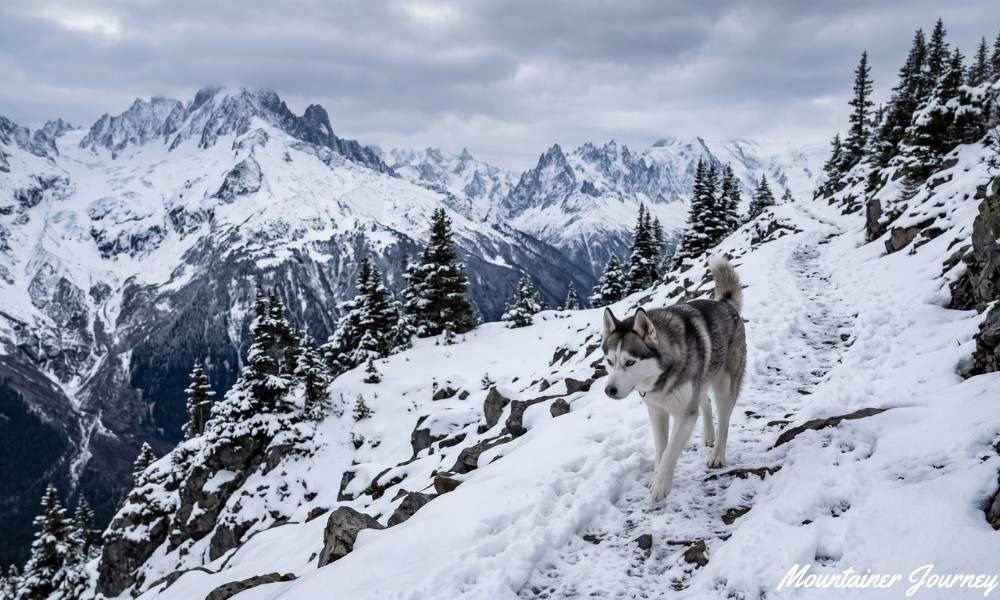
Siberian Huskies are active working dogs with strong endurance and coats suited to cold environments. They may be comfortable on cool-weather routes that would be unpleasant for thin-coated dogs.
Heat management is the major limitation. Hot or humid conditions can make strenuous exercise unsafe, and a cooler start time does not guarantee that the return journey will remain cool.
Huskies can also be independent and strongly motivated to run. A leash should remain the default, and owners should not assume breed intelligence guarantees reliable off-leash recall.
10. Bernese Mountain Dog — Best for Moderate Cool-Weather Hikes
Best for: Owners planning manageable routes in cool conditions

Bernese Mountain Dogs are powerful working dogs that may enjoy outdoor activity in suitable weather. Their calm, companionable nature can fit owners who prefer a steadier pace rather than fast trail running.
Their size, thick coat and potential joint limitations require careful route selection. Hot weather, difficult scrambles and trails without realistic exit options may be poor choices.
Emergency planning is particularly important because one person may not be able to carry a large Bernese Mountain Dog. Fitness and distance should be discussed with a veterinarian rather than inferred from the breed’s mountain heritage.
The American Kennel Club’s hiking-breed overview includes several of these breeds, but any shortlist should be treated as a starting point rather than a guarantee about an individual dog.
Mixed-Breed and Rescue Dogs Can Be Excellent Hikers
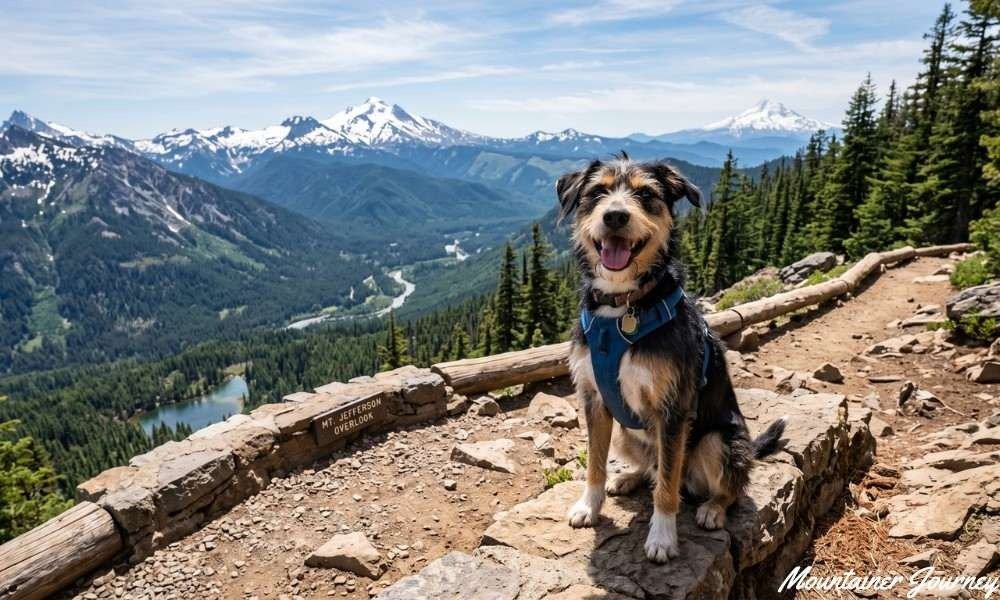
A dog does not need a pedigree to become a reliable trail companion. Many mixed-breed and rescue dogs have the fitness, temperament and trainability required for hiking.
An adult rescue dog may offer one practical advantage: its size, coat, energy level and basic temperament can be easier to observe than those of a young puppy. Shelter or foster staff may also know how the dog behaves on a leash, around strangers and during longer walks.
Ask specific questions instead of asking only whether a dog is “active”:
- How does the dog respond to other dogs?
- Does it pull strongly on a leash?
- Can it settle after exercise?
- Is it frightened by traffic, bicycles or unfamiliar sounds?
- Has it shown joint, breathing or heat-related difficulty?
- Does it become fixated on wildlife?
- How quickly does it recover after a long walk?
No rescue assessment can predict every trail situation. Allow time for the dog to adjust to its new home before treating it as an adventure partner.
Do You Need a Specific Breed for Hiking?
No. If you already have a healthy dog that enjoys walking, start by finding a route appropriate to that dog rather than comparing it with high-energy working breeds.
A smaller dog may enjoy short woodland walks. A senior dog may prefer level, shaded paths with frequent rests. A low-energy dog can still benefit from outdoor time without completing strenuous mountain routes.
If you are choosing a new dog, consider the other days of the week. High-drive breeds still need training, exercise and enrichment when you are working, the weather is poor or no hike is planned.
The right dog should fit your home, schedule and handling experience—not only the photographs you hope to take on the trail.
Dogs That May Need Easier Routes or Veterinary Approval
Any dog can have an individual health limitation. Extra care is especially important for:
- Puppies with developing bones and joints
- Senior dogs with reduced mobility or endurance
- Overweight or poorly conditioned dogs
- Dogs with heart, breathing or joint conditions
- Dogs recovering from illness, injury or surgery
- Dogs that become anxious or reactive in unfamiliar environments
- Very large dogs that cannot be carried during an emergency
- Short-muzzled dogs, especially in warm or humid weather
Short-muzzled breeds such as Pugs, Bulldogs and Boston Terriers have a higher risk of heat-related difficulty because they cannot cool themselves as efficiently through panting. Cornell University’s canine heat-safety guidance recommends extra precautions for these dogs, as well as older, overweight and thick-coated dogs.
This does not mean every dog in these groups must remain at home. It means trail length, terrain, temperature and pace should be chosen around the individual dog with appropriate veterinary guidance.
How to Know If Your Dog Is Ready to Hike
Use the following dog–trail fit check before increasing difficulty.
Green Flags
- The trail permits dogs.
- The dog is healthy and comfortable during regular walks.
- Leash pulling is manageable.
- Basic cues still work around moderate distractions.
- The weather suits the dog’s coat and health.
- A safe supply of water is available.
- The dog has recovered normally from shorter walks.
- You have a plan if the dog cannot walk back.
Yellow Flags
- This is the dog’s first natural-surface trail.
- The route is longer or steeper than its normal walks.
- The weather is warmer, colder or more humid than usual.
- The dog becomes highly excited around animals or other dogs.
- Paw protection has not been tested.
- The owner has no experience recognizing the dog’s fatigue signals.
Yellow flags do not always mean canceling. They mean choosing a shorter route, cooler time, slower pace or simpler surface.
Red Flags
- Dogs are prohibited on the trail.
- The dog is limping, ill or recovering from an injury.
- Breathing is already labored before the hike.
- Extreme heat, cold, storms, smoke or dangerous surfaces are expected.
- The dog cannot be controlled around people, dogs or wildlife.
- There is no realistic water or emergency-return plan.
A breed’s reputation should never be used to override a red flag.
How to Start Hiking With Your Dog
Begin With Normal Walks
Build reliable leash behavior and basic fitness close to home. Include mild hills and different safe surfaces before introducing a remote trail.
Choose an Easy First Trail
Start with a short, well-marked route that allows dogs and has a simple return. Avoid combining a first trail experience with high elevation, heat, crowds and difficult footing.
If you are still developing your own fitness, use our guide on how to train for hiking to build a realistic progression for the human side of the team.
Increase Gradually
Add distance, elevation and technical terrain in small stages. Watch how the dog behaves during the hike and after returning home.
A dog that appears energetic at the turnaround point may still become tired on the return journey. Plan the entire route, not only the outward distance.
Practice Trail-Specific Skills
Use ordinary walks to practice waiting at junctions, moving aside for others, ignoring discarded food and returning attention to the handler.
If navigation is unfamiliar, review how to avoid getting lost while hiking before adding the complication of managing a dog.
Smart Hiking Tip: Change One Variable at a Time
When progressing to harder hikes, change only one major variable at a time: distance, elevation, surface or weather.
For example, use a slightly longer trail with familiar terrain rather than increasing both mileage and climbing on the same day. On the next suitable outing, keep the distance similar and introduce a modest elevation change.
This makes it easier to identify what the dog handled well and what caused discomfort, fatigue or behavioral difficulty. It also prevents several manageable challenges from becoming one overwhelming trip.
Smart Safety Check: Use the Short-Trail and Carry-Out Test
Before a demanding hike, complete an easy local trail of about two miles—or a shorter distance appropriate to your dog. Test the leash, harness, water bowl, pacing cues and rest routine.
Afterward, check the dog’s paws, movement, appetite and normal behavior. Do not progress if limping, unusual stiffness, excessive fatigue or another concern appears.
Also test the emergency plan before you need it. Learn how an emergency sling works, determine whether another person is needed and choose accessible routes when carrying the dog would be unrealistic.
Hiking With Dogs Safely in Different Conditions
Hot Weather

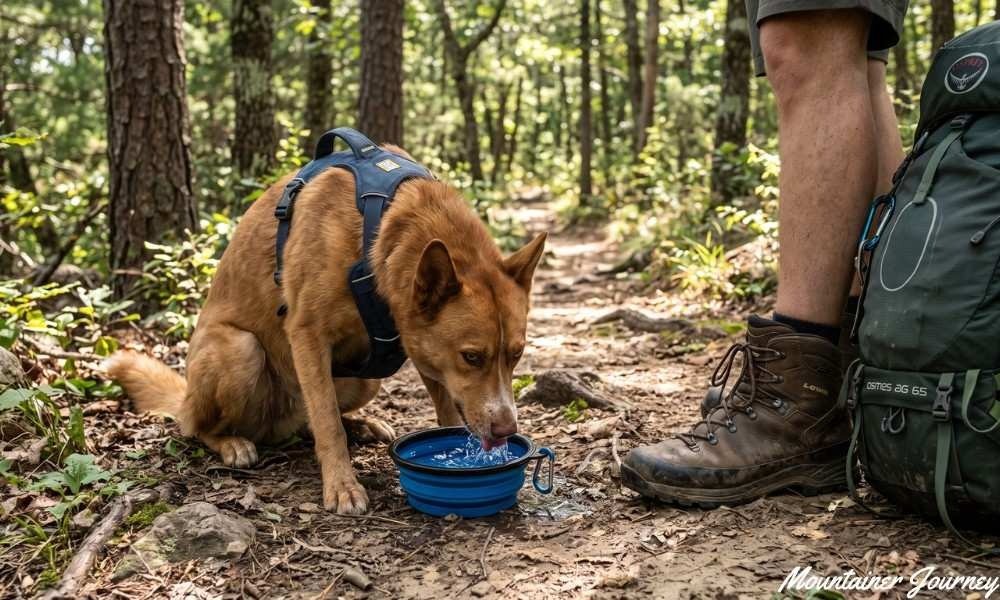
Schedule hikes during cooler hours and reconsider the trip when heat or humidity remains high. Carry water from a known safe source and take breaks before the dog appears exhausted.
The American Veterinary Medical Association advises avoiding hot surfaces that can burn paws and moving walks or hikes to cooler parts of the day.
Heavy panting, excessive drooling, vomiting, weakness, confusion or collapse can indicate a heat emergency. Move the dog out of the heat and seek urgent veterinary guidance. Do not continue because the trailhead appears close.
Cold, Snow and Ice
Cold tolerance varies with coat, size, health, wind and moisture. Short-coated dogs may need an appropriate layer, while even cold-adapted dogs can suffer paw problems from ice and deicing chemicals.
Avoid frozen ponds and uncertain ice. The AVMA’s cold-weather safety guidance recommends staying away from frozen bodies of water because their ability to support a dog cannot be assumed.
Water Sources
Carry enough water instead of depending on streams, ponds or puddles. Clear-looking water can contain pathogens, while stagnant or discolored water may contain harmful algal growth.
The CDC’s pet travel safety guidance advises keeping pets away from stagnant, discolored, foul-smelling or foamy water and water with visible scum or algal mats.
Ticks and Trail Debris
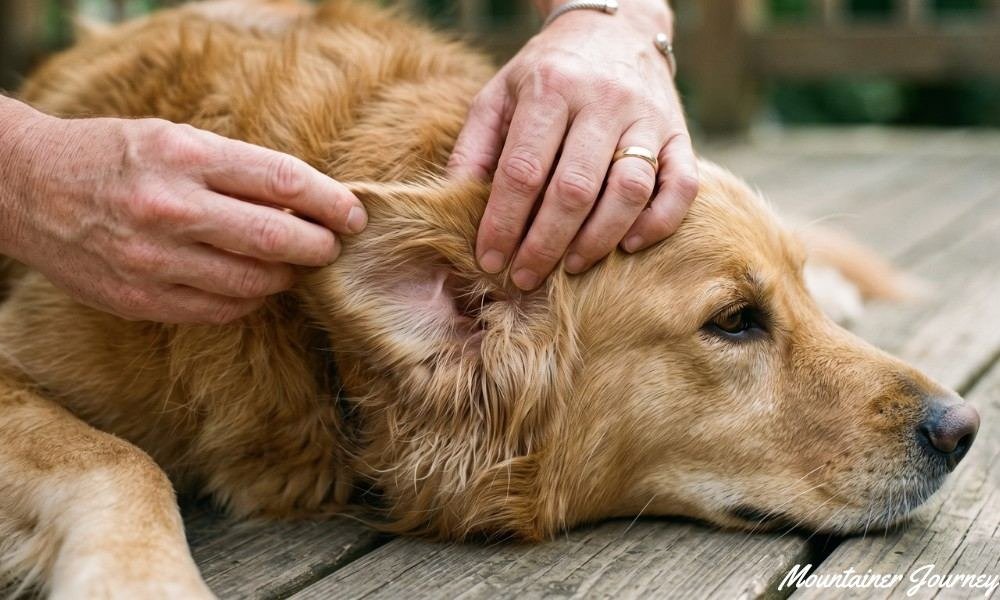
Check the dog after every outdoor outing, paying attention around the ears, eyelids, collar, legs, toes and tail.
The CDC recommends daily tick checks for pets that spend time outdoors and advises owners to discuss locally appropriate preventive products with a veterinarian.
Remove burrs, thorns and foxtails before they work deeper into the coat or skin. Long- and dark-coated dogs require a particularly careful inspection.
Paws and Rough Terrain
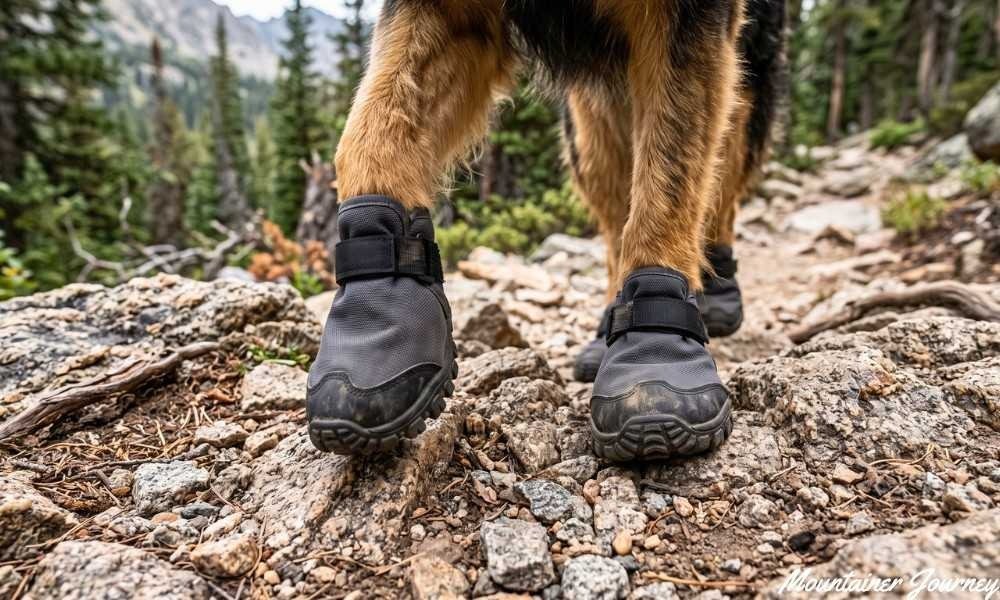
Inspect surfaces throughout the hike. Rock, sharp gravel, ice, hot ground and abrasive sand can damage paws even when the dog continues walking.
Booties may help in specific conditions, but they must fit correctly and should be tested on short walks first. They are not a substitute for choosing terrain the dog can safely handle.
Trail Rules and Responsible Dog Hiking

Dog-friendly does not mean dogs are permitted everywhere on a property. A park may allow pets near roads, campgrounds or paved paths while prohibiting them on particular hiking trails.
The National Park Service states that many parks do not allow pets on hiking trails or boardwalks and advises visitors to check the individual park before arriving.
Follow the exact land manager’s rules for:
- Dog access
- Leash length
- Seasonal closures
- Wildlife-protection areas
- Waste disposal
- Camping and shelter access
- Public transportation or shuttle use
The National Park Service summarizes responsible pet visits through its B.A.R.K. principles: bag waste, always use a leash, respect wildlife and know where pets may go.
Keeping a dog leashed also protects people who are uncomfortable around dogs and owners managing reactive pets. A friendly dog approaching without permission can still create a dangerous situation.
For broader low-impact planning, see our guide to planning a sustainable hiking trip.
Do You Need Special Dog Hiking Gear?

Most dogs do not need a backpack, boots or expensive outdoor equipment for an easy first hike. Start with a secure leash, identification, safe drinking water, waste bags and any health-related items your dog genuinely requires.
A dog backpack is optional. Do not add weight simply because the breed appears strong. The dog should be mature, conditioned and comfortable with the pack, while its fit and load should follow veterinary and manufacturer guidance.
Before buying optional equipment, test what your dog actually needs on shorter outings. Our hiking-on-a-budget guide explains how to borrow, test or delay nonessential purchases instead of buying a complete setup immediately.
Dog Hiking Gear Checklist
Not every dog needs boots, a backpack or expensive outdoor equipment. Start with safety and function.
Dog Hiking Gear Checklist
Not every dog needs boots or a backpack. Start with safety and function to ensure a secure, enjoyable trip for you and your companion.
Common Mistakes When Choosing or Hiking With a Dog
- Choosing a breed from hiking photographs. Appearance does not show health, temperament or everyday exercise needs.
- Buying a high-energy breed for occasional adventures. Working dogs still require activity and training between hikes.
- Making the first hike an endurance test. Start with an easy route and build gradually.
- Assuming every dog-friendly property allows dogs on every trail. Check the exact route.
- Using enthusiasm as proof of fitness. Some dogs continue despite fatigue or discomfort.
- Allowing uncontrolled off-leash hiking. A friendly dog can disturb wildlife or frighten other visitors.
- Depending on streams for drinking water. Carry safe water unless a veterinarian-approved treatment plan applies.
- Ignoring the return distance. The dog needs enough energy to reach the trailhead, not merely the viewpoint.
- Introducing untested boots or a pack on a long trail. Test fit and movement close to home.
- Leaving no emergency carry-out plan. This is especially risky with large dogs and remote routes.
- Skipping post-hike checks. Ticks, paw damage and embedded debris may not be obvious during the walk.
- Continuing through heat or breathing warning signs. Turning around early is part of responsible hiking.
Final Takeaway
The Labrador Retriever is a practical all-around starting point for many active households, while Australian Shepherds, Border Collies, Australian Cattle Dogs and German Shorthaired Pointers may suit experienced owners who can meet their higher daily activity and training needs. Siberian Huskies are better matched to cooler conditions, while short-coated breeds may need added cold-weather protection.
Breed alone cannot identify the best hiking dog. A healthy, trained mixed-breed dog on an appropriate route may be a safer and more enjoyable companion than an unconditioned dog from a famous outdoor breed.
Choose the individual dog first. Match the route to its current ability, confirm the rules, control one progression variable at a time and keep a realistic carry-out plan. Hiking with dogs safely depends more on preparation and judgment than on the name written on a pedigree.
Frequently Asked Questions
For many active households, a healthy, well-trained Labrador Retriever is a versatile choice. However, the best hiking dogs are selected by individual fitness, temperament, climate tolerance and trail behavior—not breed reputation alone.
Conditioned German Shorthaired Pointers, Australian Shepherds, Border Collies, Australian Cattle Dogs and Vizslas may suit longer outings. Distance should still increase gradually, while age, health, recovery and weather tolerance guide the plan.
Good hiking dogs for wooded trails remain controlled around wildlife, respond to “leave it” and walk calmly on a leash. Coat visibility, tick checks, reliable recall and comfort on uneven ground matter more than breed alone.
Yes. Size alone does not determine trail ability. A healthy, trained smaller dog can enjoy suitable routes, but owners should choose manageable terrain, watch obstacles and temperature, and maintain a safe emergency carry plan.
No dog is completely non-shedding. Standard Poodles are often chosen for lower-shedding coats and can be athletic trail partners, but they require regular grooming and careful checks for burrs, ticks and debris.
No breed is automatically safe off-leash. Use a leash wherever required, and consider off-leash hiking only where legal and when the dog has reliable recall, calm wildlife behavior and consistent verbal control.
Yes. Mixed-breed and rescue dogs can become excellent hiking partners. Their suitability depends on health, energy, temperament, training and climate fit. An adult rescue’s size and everyday behavior may also be easier to evaluate.
Start with short walks and an easy dog-friendly trail. The dog should remain comfortable on leash, respond to basic cues and recover normally afterward. Ask a veterinarian before strenuous hikes if health, age or breathing is a concern.
Official and Reliable Sources
- National Park Service — Hiking with Pets
- National Park Service — B.A.R.K. Ranger Principles
- American Veterinary Medical Association — Warm Weather Pet Safety
- American Veterinary Medical Association — Cold Weather Animal Safety
- CDC — Preventing Ticks on Pets
- CDC — Pet Travel and Outdoor Safety
- Cornell University — Summer Heat Safety for Dogs
- American Kennel Club — Hiking Dog Breeds
- American Kennel Club — Training a Dog for Hiking
If you notice an outdated detail or broken source link, email mountainerjourney@gmail.com with the article URL and a reliable supporting source.


