

Editorially reviewed by: Maaz Basharat, Founder and Managing Editor
Last reviewed: September 2026
Learning how to plan a sustainable hiking trip starts with four decisions: where and when you hike, how you reach the trailhead, what you bring, and how you behave once you arrive.
Choose an official route that suits your group and the current conditions. Check local rules, permits and alerts. Use public transportation, a park shuttle or a shared ride when practical. Pack food and water in reusable containers, stay on established surfaces, carry out waste and respect wildlife, other visitors and nearby communities.
The aim is not to create a trip with zero impact. Every visit uses resources. A realistic goal is to reduce avoidable harm without cutting the preparation, equipment or transportation needed for a safe return.
Editorial Note: How This Guide Was Prepared
This research-led guide was prepared using guidance from Leave No Trace, the National Park Service, the U.S. Environmental Protection Agency and the Appalachian Trail Conservancy. Mountainer Journey does not claim that every trail, transportation method or item mentioned was personally tested by the editorial team.
General outdoor ethics cannot replace location-specific rules. Trail access, fire restrictions, wildlife guidance, pet policies and waste requirements vary by property and may change, so check the current official land manager page before leaving.
Sustainable Hiking Plan at a Glance
| Planning decision | Lower-impact starting point | Confirm before the trip |
| Trail | An established route suited to the group | Difficulty, surface, elevation and closures |
| Timing | A quieter day or time when conditions are suitable | Access hours, weather and seasonal restrictions |
| Transport | Walk, bike, transit, shuttle or carpool when practical | Safe return schedule and authorized parking |
| Gear | Use suitable items already owned | Fit, condition and route-specific safety needs |
| Food and water | Pack from home in reusable containers | Water availability and treatment requirements |
| Waste | Carry a dedicated waste bag | Toilets and human-waste rules |
| Trail behavior | Stay on established durable surfaces | Local signs, closures and one-way routes |
| Wildlife and pets | Observe from a distance and secure food | Required distances, leash rules and food storage |
| Local impact | Use authorized services and respect residents | Private property, gates and community rules |
What Makes a Hiking Trip Sustainable?

Sustainable hiking means reducing avoidable environmental and community impacts while keeping the trip safe, legal and appropriate for the people taking part.
It includes more than carrying a reusable bottle. The route, travel distance, group size, timing, equipment, food, waste and on-trail decisions all matter. A short local day hike with existing gear may be a better choice than driving several hours to a famous trail and buying a new outfit for it.
The most useful eco-friendly hiking tips are usually ordinary planning habits: choose a suitable established route, travel efficiently, reuse dependable equipment and leave the place as you found it.
The Leave No Trace Seven Principles provide a useful foundation: plan ahead, use durable surfaces, dispose of waste properly, leave natural and cultural items in place, minimize fire impacts, respect wildlife and consider other visitors.
How to Plan a Sustainable Hiking Trip Step by Step
1. Choose a Suitable Official Trail

Begin with an official park, forest, conservation organization or local land-manager page. Look for an established route with a defined trailhead and enough information to judge whether it fits the group.
Check:
- Distance and elevation gain
- Expected terrain and trail surface
- Estimated time and available daylight
- Current weather exposure
- Water crossings or other hazards
- Parking, permits and reservations
- Group-size and pet restrictions
- Seasonal closures
A nearby route often reduces travel and makes it easier to return another day if conditions change. It can also remove the need for lodging, complicated transfers or a rushed schedule.
Do not choose an unofficial path simply because it looks quieter on social media. A lesser-known official trail can distribute use, but an unrecognized shortcut or social trail may cross private property or sensitive habitat.
For a regional example, our guide to hiking around Chattanooga compares trail difficulty, parking, fees and reservations, helping readers choose a route that fits the complete plan.
2. Pick the Time With Conditions in Mind
Avoiding the busiest hour or day can reduce parking pressure and crowding, but “off-season” does not automatically mean responsible or safe.
A quiet trail may be closed for wildlife protection, hunting, flooding, wildfire risk, snow or maintenance. Soft, saturated ground may also be more vulnerable to damage. Check the current land-manager notice before deciding that a less popular time is suitable.
If a trail is open but very muddy, follow posted guidance. On an established trail, stepping around puddles can widen the route and damage its edges. If the conditions are likely to cause excessive damage or exceed your equipment and ability, choose a hardened path, use the Plan B route or postpone the trip. The Appalachian Trail Conservancy advises hikers to remain on the established trail, walk through mud instead of widening the path and avoid cutting switchbacks.
3. Check Rules, Alerts, Permits and Closures
Open the official property page again shortly before leaving. A saved blog, map app or older trip report may not reflect a new closure or access rule.
Confirm:
- Trail and road status
- Weather and fire alerts
- Entrance, parking or reservation charges
- Permit requirements
- Access and gate hours
- Shuttle schedules
- Camping and campfire rules
- Food-storage requirements
- Human-waste instructions
- Dog and leash policies
- Protected habitat or seasonal restrictions
Create a Plan B that uses a different official route or activity. That makes it easier to accept a closure instead of trying to work around it.
Leave No Trace’s Plan Ahead and Prepare guidance recommends learning local regulations, preparing for hazards, considering quieter times, keeping groups manageable and reducing unnecessary food packaging before the trip.
The National Park Service’s Hike Smart guidance recommends selecting a trail that matches the group, checking current alerts and weather, sharing a trip plan and preparing for emergencies. These decisions protect visitors while reducing avoidable pressure on staff and natural resources.
4. Reduce Transport Impact Where Practical

Transportation deserves attention because it is repeated on every trip. The U.S. Environmental Protection Agency recommends walking, biking, public transportation and carpooling as practical ways to reduce vehicle-related pollution.
Use this order as a planning prompt, not a rigid rule:
- Choose a suitable trail close to home.
- Walk or cycle to the trailhead when the route is safe and permitted.
- Check public transportation and official park shuttles.
- Share one vehicle with the hiking group.
- Combine necessary errands rather than making separate trips.
- If driving alone is the only safe, workable choice, select an efficient route and use authorized parking.
A transit option is useful only when its timetable allows a reliable return. A carpool works only when everyone agrees on the meeting point, costs, equipment space and departure time. Sustainability should not leave a hiker stranded after the last bus or force a driver to continue when tired.
Never reduce parking impact by blocking a gate, stopping on vegetation or using a residential area where trail parking is prohibited.
Smart Sustainability Tip: Use the One-Change Rule
Do not try to make every part of a hiking trip perfect at once. Pick one practical improvement for the next trip: choose a closer trail, carpool, pack reusable containers, avoid single-use snacks or visit at a less crowded time.
Small repeatable changes are easier to keep than a long list of rules. Over time, they reduce waste, travel impact and trail pressure without making the trip feel complicated.
5. Match the Group, Route and Safety Plan
A trip that exceeds the group’s ability can lead to unplanned shortcuts, travel after dark or emergency assistance. Choose the route around the least experienced participant, current conditions and the equipment everyone can use correctly.
Before leaving:
- Share the route and expected return with a reliable person.
- Download or carry the official map.
- Set a turnaround time.
- Carry route-appropriate essentials, food, water and medication.
- Decide what will trigger a change to the Plan B route.
- Keep the group small enough to meet local rules and move without blocking the trail.
Do not remove a light, navigation backup, weather layer or necessary water simply to make the pack look minimalist. A responsible trip protects people as well as the place. Our guide on how to avoid getting lost while hiking explains how official maps, offline navigation and a dependable backup should work together.
6. Use, Borrow, Repair or Rent Gear

The most sustainable hiking gear is often the suitable equipment already in your closet. Replacing functional gear with a newly marketed “green” alternative still requires materials, packaging and transportation. Reusing a dependable item usually has more practical value than relying on an environmental claim printed on a label.
Repair, borrow or rent before buying. When a new purchase becomes necessary, prioritize footwear fit, traction, weather protection, navigation, lighting and other safety functions over vague sustainability claims.
Our hiking-on-a-budget guide explains the use–borrow–rent–buy approach, including when secondhand equipment is appropriate and what to inspect before paying.
Clean footwear, clothing and equipment before and after visiting a different natural area. Seeds, soil and other material can travel in boot treads, pet fur and outdoor gear. The National Park Service’s invasive-species prevention guidance recommends cleaning footwear and equipment to help limit their spread.
7. Pack Lower-Waste Food and Water

Food preparation is one of the easiest places to reduce waste without buying special hiking products.
Pack familiar food from home in reusable containers where practical. Choose portions that meet the route and include an extra snack for an unexpected delay. Remove unnecessary outer packaging before the hike, but keep required labels or instructions for medication, allergy management and water treatment.
A reusable bottle or hydration container works when it provides enough safe capacity for the route. Do not carry less water to reduce pack weight. If the trip relies on natural sources, check whether they are available and carry a treatment method suited to the location.
Fruit peels, nut shells and leftover food do not belong on the trail. “Biodegradable” does not mean it is appropriate to live in a natural area. Pack out every food scrap along with wrappers and used napkins.
8. Plan for Trash and Human Waste
Carry a small, secure bag for wrappers, food scraps, tissues, pet waste and any other rubbish. Do not assume a trailhead bin will be present or empty. If a bin is full, take the waste home.
Use an available restroom before starting. For trips without facilities, check the property’s exact human-waste rule. Some places require waste to be packed out, while others permit a cathole under specified conditions.
Where catholes are permitted, Leave No Trace’s waste-disposal guidance recommends digging them 6 to 8 inches deep and at least 200 feet from water, camps and trails. Local regulations may be stricter and always take priority. Toilet paper and hygiene products may also need to be packed out.
Do not burn trash. It may not burn completely, can leave residue and may violate fire restrictions.
9. Follow Responsible Trail Behavior

Responsible trail travel is mostly a series of small decisions made consistently.
- Stay on established trails and durable surfaces.
- Do not cut switchbacks.
- Walk single file where the trail is narrow.
- Follow posted one-way or shared-use directions.
- Yield according to local trail guidance.
- Keep voices, speakers and other noise low.
- Leave gates as directed.
- Do not carve, paint or attach items to trees and rocks.
- Leave rocks, plants, artifacts and historic features in place.
- Do not create or move rock cairns. Existing cairns may be official navigation markers.
For an overnight trip, use designated or already established campsites where required. Do not clear vegetation to improve a site.
Use a stove when permitted and suitable. Have a no-fire meal plan when fires are prohibited. If a campfire is legal, follow the land manager’s rules, use an existing ring where directed, keep it controlled and make it fully cold before leaving.
10. Protect Wildlife, Plants and Water
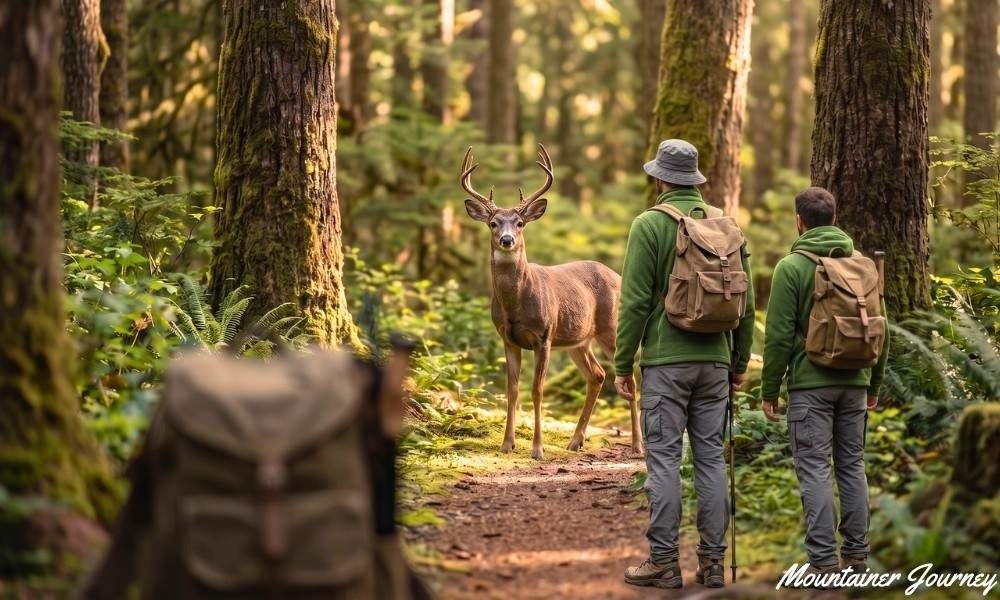
Store food, scented items and waste according to the local rule. A bear-resistant container, locker or another method may be required in some areas. Do not assume one storage method is accepted everywhere.
Keep dogs leashed wherever required, prevent them from chasing or approaching wildlife, and pack out pet waste. A dog-friendly trail may still have seasonal restrictions or areas where pets are prohibited. Our guide to the best hiking dogs explains individual readiness, responsible trail behavior and dog-safety planning.
Do not pick flowers, move rocks, collect artifacts or disturb nests. Wash dishes and use soap only as permitted and away from natural water sources. The fact that a product is labeled biodegradable does not make it suitable for direct use in a stream or lake.
Support the Local Community

Sustainability also includes the people who live and work around the trail.
Use official parking and access points. Keep noise down near homes, respect private property and avoid blocking roads, mailboxes and emergency access. Follow rules at Tribal, cultural and historic sites without treating them as background scenery for content.
When the trip involves food, lodging, guiding or supplies, consider locally owned options that meet your needs. Buy required permits and pass through the official channel. These choices are more useful than claiming a trip is sustainable while ignoring the place that hosts it.
You can also support a trail by reporting damage through the land manager, joining an authorized maintenance day or donating to a credible local conservation organization. Do not attempt your own trail construction or sign installation.
If you are comparing several hikes around one regional base, our guide to the best hikes in Georgia can help you choose nearby routes and reduce unnecessary travel between distant destinations.
What to Do After the Hike
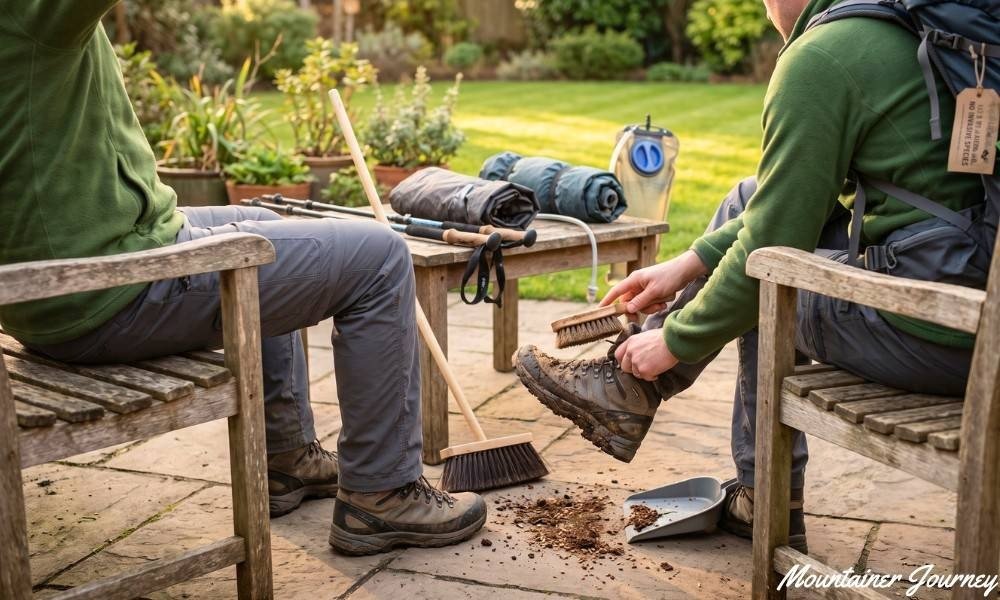
The return home is part of the plan.
- Carry all waste out and sort it where local services allow.
- Clean and dry footwear, clothing and equipment.
- Remove seeds and mud before visiting another natural area.
- Store gear correctly so it lasts longer.
- Report damaged signs, unsafe trail conditions or overflowing facilities to the land manager.
- Record which food, water and equipment were actually used.
- Note any planning decision that should change next time.
A short review prevents repeated waste. It may show that the group packed too much food, drove farther than necessary or bought an item that could have been borrowed. It may also confirm that a safety item was worth carrying even though it was not used.
Sample Sustainable Day-Hike Plan
This example is an illustrative planning scenario, not a record of a trip completed by the editorial team.
Scenario: Three friends want a half-day forest hike within driving distance.
| Decision | Practical choice |
| Route | Choose an established loop that matches the least experienced hiker. |
| Timing | Check conditions and use a quieter open period rather than a protected or closed season. |
| Rules | Confirm parking, access hours, dog policy and current alerts on the official page. |
| Transport | Meet at an authorized location and use one vehicle. |
| Gear | Use suitable existing packs, shoes, layers, navigation and safety items. |
| Food and water | Fill reusable containers at home and pack food in washable boxes. |
| Waste | Carry one secure group trash bag plus personal hygiene supplies. |
| Trail behavior | Stay on the route, avoid shortcuts and keep noise low. |
| Plan B | Select a nearby hardened trail in case the first route is closed or too wet. |
| After the hike | Clean boots, check for seeds and report any official trail damage. |
The plan is sustainable because the decisions work together. No single bottle, boot or vehicle makes the trip responsible on its own.
Day Hike vs. Overnight Trip
| Area | Day hike | Overnight trip |
| Route planning | Trail, time, parking and turnaround | All-day hike needs plus campsites, daily stages and exit options |
| Food | Packed meals and an emergency snack | Meal plan, storage method, cooking rules and more packaging control |
| Water | Carry enough or verify a treatment plan | Confirm sources, seasonal reliability and treatment throughout the route |
| Waste | Trash bag and restroom plan | Human-waste method, dishwater plan and campsite rules |
| Gear | Route-appropriate day-hiking essentials | Shelter, sleep system, stove and food storage where required |
| Local impact | Authorized access and respectful use | Campsite, permit, fire, noise and longer-stay requirements |
An overnight trip is not simply a day hike with a tent. If the additional equipment and skills are not ready, choose a day route and build experience first.
Sustainable Hiking Safety Checks
Match the route to the group: Choose distance, elevation and terrain around the least experienced participant rather than the strongest hiker.
Check current conditions: Review the official trail page, weather forecast, closures, fire restrictions and wildlife notices shortly before leaving.
Carry essential safety systems: Bring suitable navigation, lighting, weather protection, first aid, food, water, medication and emergency supplies.
Set a turnaround time: Leave enough daylight and energy for the complete return journey, including delays caused by weather or route-finding.
Share the trip plan: Tell a reliable person which route you are taking, where you parked and when you expect to return.
Use a legal Plan B: If the original trail is closed, unsafe or too crowded, move to another official route instead of creating a shortcut or bypassing restrictions.
Common Sustainable-Hiking Mistakes
- Buying a completely new “eco” setup while suitable gear is already available.
- Driving far past suitable local trails only because a route is famous online.
- Assuming an off-season visit is responsible without checking closures or conditions.
- Choosing an unofficial path to avoid crowds.
- Walking around mud and gradually widening the trail.
- Leaving fruit peels or food scraps because they are biodegradable.
- Treating a reusable bottle as a substitute for carrying enough water.
- Ignoring property-specific rules for fires, dogs, food storage or human waste.
- Moving or building cairns without knowing whether they are navigation markers.
- Reducing safety equipment to make a pack lighter or look minimalist.
- Parking illegally or blocking local access.
- Leaving a full trailhead bin to handle extra rubbish.
- Forgetting to clean boots, pet fur and equipment between locations.
- Posting directions to a sensitive unofficial site without considering the impact.
Sustainable Hiking Trip Checklist
Sustainable Hiking Trip Checklist
Work through each item while planning your hike — tick items off as you go, then print or save your progress before you head out.
Final Takeaway
A sustainable hiking trip is not built around perfect products or a claim of zero impact. It is built around better choices that fit the route: travel a practical distance, use established access, follow current rules, bring durable gear, reduce waste and behave with care on the trail.
Start with the decisions that have the widest effect: trail, timing and transport. Then prepare food, water, equipment and waste systems for that specific route. Keep safety intact, respect local communities and review the trip afterward.
That is the practical foundation of responsible trail travel.
Frequently Asked Questions
Sustainable hiking means reducing avoidable environmental and community impacts while keeping the trip safe and legal. It includes choosing an appropriate route, limiting unnecessary travel and waste, staying on durable surfaces, respecting wildlife and following local land-manager rules.
Start with a short official trail close to home. Check its difficulty, terrain, weather, access and current alerts. Use suitable gear you already own, pack food and water from home, share your route and prepare a safe Plan B.
Yes. Sustainable hiking should never mean removing necessary safety equipment. The National Park Service’s Ten Essentials include navigation, illumination, weather protection, first aid, food, water and other emergency systems that should be adapted to the route.
Usually not. One of the most practical eco-friendly hiking tips is to keep using safe, functional equipment. Repair, borrow or rent before buying, then purchase new gear when fit, reliability, hygiene or repeated use genuinely justifies it.
Choose a suitable nearby trail, then compare walking, cycling, public transportation, park shuttles and carpooling. Use the option that provides a safe return. When driving is necessary, share the trip where practical and use authorized parking.
Pack out all food scraps, including peels and shells. Use available restrooms when possible. Without facilities, follow the land manager’s exact instructions because permitted disposal methods vary, and some locations require human waste and toilet paper to be packed out.
Not necessarily. Established popular trails may concentrate visitors on durable surfaces. Visit during an appropriate quieter period, obey reservations and closures, and choose another official route when weather, parking limits or current conditions make the original option unsuitable.
Official and Reliable Sources
- Leave No Trace — The Seven Principles
- Leave No Trace — Plan Ahead and Prepare
- Leave No Trace — Dispose of Waste Properly
- National Park Service — Hike Smart
- National Park Service — Preventing the Spread of Invasive Species
- U.S. Environmental Protection Agency — Reduce Pollution From Vehicles and Engines
- Appalachian Trail Conservancy — Applying Leave No Trace to Hiking Adventures
If you notice an outdated detail or broken official link, email mountainerjourney@gmail.com with the article URL and a reliable supporting source.


