

Last updated: November 4, 2026
Asheville sits in the Blue Ridge Mountains, and the waterfalls are one of the best reasons to visit. In this guide to the best waterfalls near Asheville, you will find ten falls I have actually visited, with the drive time, trail length, and whether you can swim. Most are within an hour of downtown Asheville, and several are roadside or on short, family-friendly trails. Bring water, wear shoes with good grip, and do not climb on wet rocks.
Waterfalls After Hurricane Helene
Most of the waterfalls in this guide are open after Hurricane Helene, but three places still carry storm damage worth knowing before you go. At Linville Falls, Helene destroyed the visitor center and closed the campground and picnic area, while the trails to the falls stayed open. The National Park Service is planning the rebuild, with design and construction starting in 2027.
At Catawba Falls, the full loop trail is open, but the upper viewing platform and the Wildflower Trail are still closed after Helene. At Triple Falls in DuPont State Forest, the trail reopened in May 2025, but the stairs down to the broad rock shelf in the middle of the falls are still closed and fenced off. Check the latest conditions before you go, and stay behind every barrier.
1. Looking Glass Falls: The Roadside Classic
Looking Glass Falls is the classic roadside waterfall near Asheville. It is 60 feet tall, the water is usually strong, and the viewing area is steps from the parking area. It is one of the easiest waterfalls to reach in Western North Carolina, and that is why it is first on this list.
From downtown Asheville, it is about 45 minutes along US 276 through the Pisgah National Forest. The falls face the road, so you can watch them from the car park or walk to the base. The best time to visit is after rain, when the water is full and fast. In summer, people swim in the pool at the base, but the water is cold and the rocks are slippery. Read my Asheville guide to plan the drive, food, and timing in one trip.
2. Moore Cove Falls: Walk Behind the Water
Moore Cove Falls is the one waterfall near Asheville where you can walk behind the falls. A 1.4-mile trail through a forest cove leads to a 50-foot waterfall that drops from an overhang. The path behind it is the best part, and it is one of the most memorable short hikes in the area.
Start at the Looking Glass Falls parking area and follow the trail to the right. The climb is gentle, and most people finish it in under an hour. After rain, the falls are stronger, and the rock face behind them is a good place to stand and watch the water. It is a great choice for families and first-time hikers.
3. Crabtree Falls: The Parkway Waterfall
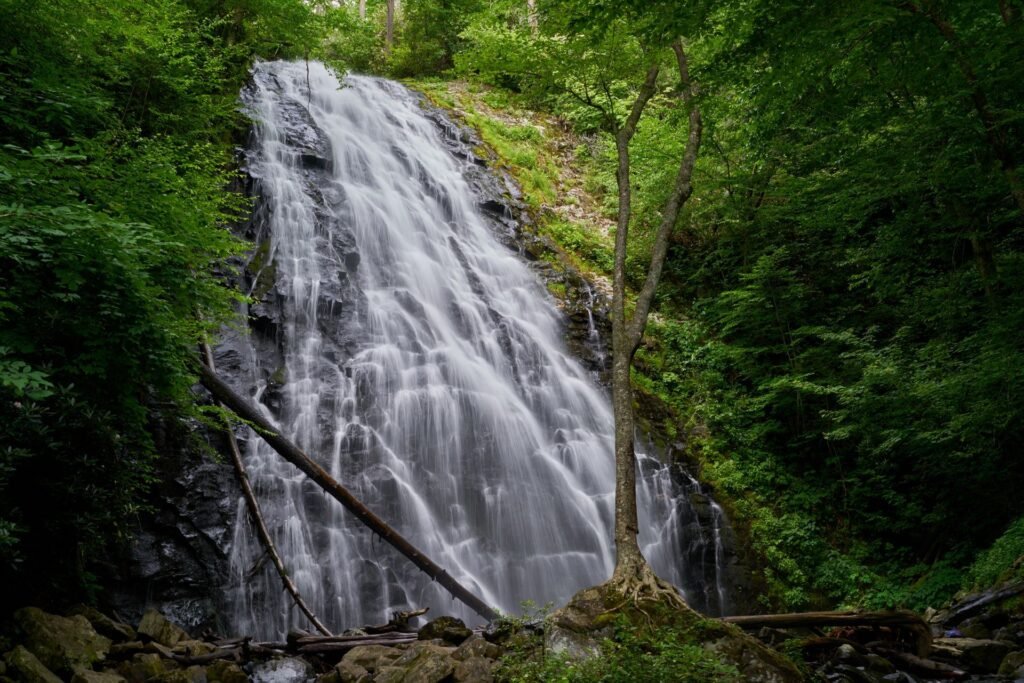
Crabtree Falls is a 70-foot waterfall that flows down a rock face in a quiet forest setting. The 2.5-mile loop trail starts at the Crabtree Falls Campground on the Blue Ridge Parkway. The walk is mostly downhill on the way in, so the return is the harder part.
The trail is well marked and the waterfall is in a cool, shaded cove, so it is a good choice in summer. Bring water and take your time on the way back up. At 2,300 feet above sea level, the air is cooler here than in downtown Asheville. My Asheville elevation guide explains why that changes the weather, the views, and what to wear.
4. Catawba Falls: The Closest Big Waterfall
Catawba Falls is a 100-foot waterfall about 30 minutes east of Asheville, near Old Fort. The trail is 1.5 miles round trip, with a bridge and a few steps near the falls. It is one of the most popular waterfalls near Asheville because it is close, the walk is short, and the waterfall is wide and powerful.
The trail crosses the river on a bridge, and the falls are at the end of a short climb. It is a good choice if you want a big waterfall without a long hike. The area is also close to the shops and restaurants of Black Mountain, so it is easy to make a half-day trip out of it.
5. Linville Falls: The Gorge Waterfall
Linville Falls is a 150-foot waterfall that drops into the Linville Gorge. It is about 75 minutes northeast of Asheville on the Blue Ridge Parkway, and it is worth the drive. The Parkway drive is interrupted right now by the Helene closure between MP 344.2 and 355.3, so check the Park Service road status page and expect a detour off the Parkway for part of the drive. The falls have two main views: Erwin’s View and the upper falls overlook.
Erwin’s View is the best first view, with the gorge in the background and the waterfall in front of you. The trail is 1.6 miles round trip and mostly easy. In summer, bring water and sunscreen because the trail is exposed. For the latest news on access after Hurricane Helene, see the Linville Falls recovery plan from the National Park Service.
6. Upper Whitewater Falls: The Tallest in the East
Upper Whitewater Falls is the tallest waterfall east of the Mississippi, at 411 feet. It is about 90 minutes southwest of Asheville, near Cashiers. The falls drop down a rock face in steps, and the view from the upper overlook is one of the best in the area.
The Upper Falls alone are 411 feet, with the Lower Falls adding another 400 feet further down the river. A short trail from the parking area leads to the overlook, and the trail continues to the base of the falls for a closer view. It is a good choice if you want to see the tallest waterfall in the east without a long hike. The Explore Asheville waterfall guide has the same distance and height for this fall, so you can cross-check before you go.
7. Dry Falls and the Three Falls of DuPont State Forest
Dry Falls is a 75-foot waterfall near Highlands that you can walk behind. The trail is a short, easy walk from the parking area, and the waterfall drops into a pool below. It is one of the best waterfalls near Asheville for a quick stop, and it is on the way to the other falls in the area. For more Highlands trails, see our guide to hiking in Highlands.
At DuPont State Forest, you can see three falls in one hike: Hooker Falls, Triple Falls, and High Falls. The loop trail is 3.5 miles, and the falls are all close to the trail. My Highlands guide has the details for the best time to go, the parking, and what to bring. For the full forest guide, see DuPont State Forest.
8. High Falls at Lake Glenville
High Falls is a 150-foot waterfall near Cashiers, about 90 minutes southwest of Asheville. The trail is 1.2 miles round trip, and the waterfall drops into a lake below. The walk is easy, and the falls are a good choice for a summer day because you can swim in the lake at the base.
High Falls has a few cautions. It is not a long trail, but the trail is steep in places and the rocks are slippery when wet. Bring water and wear shoes with good grip. The trail is also a good choice for kids, as the walk is short and the falls are easy to see. My guide to Asheville with kids has more ideas for family-friendly trails in the area.
How to Choose the Best Waterfall for You
Choose a waterfall based on how much time you have, how far you want to drive, and how far you want to walk. For a quick stop, pick a roadside waterfall like Looking Glass Falls. For a short hike, choose Moore Cove Falls or Catawba Falls. For a full day out, drive to Linville Falls or Upper Whitewater Falls.
If you are short on time, pick one fall and spend an hour there. If you have a full day, pick two falls that are close together, such as Dry Falls and the falls at DuPont State Forest. For a longer trip, see my day trips guide for the best way to combine waterfalls, towns, and scenic drives.
Waterfall Safety: What to Know Before You Go
Waterfall safety is about respecting the water, the rocks, and the weather. Never climb on wet rocks, and never swim in a pool with a strong current. Stay on marked trails, and keep children within sight at all times.
The safest way to visit waterfalls is to go in dry weather, wear shoes with good grip, and bring water and a phone. If the water is high after rain, stay back from the edge and do not cross flooded streams. A few minutes of care is worth it for a safe day out.
Frequently Asked Questions
The best waterfalls near Asheville are Looking Glass Falls, Moore Cove Falls, Crabtree Falls, Catawba Falls, and Linville Falls. They are all within 90 minutes of downtown Asheville, and most are on short trails or roadside.
Catawba Falls is the closest big waterfall to Asheville, at about 30 minutes east of downtown. The trail is 1.5 miles round trip and the falls are 100 feet tall.
Yes, you can swim at some waterfalls near Asheville, such as Looking Glass Falls and High Falls. The water is cold and the rocks are slippery, so check the depth and the current first and never swim alone.
Most waterfalls near Asheville are open after Hurricane Helene, but some trails are still being repaired. Check the latest trail conditions before you go, and be ready for some sections to be closed.
Upper Whitewater Falls is the tallest waterfall near Asheville, at 411 feet. It is about 90 minutes southwest of Asheville, near Cashiers, and it is the tallest waterfall east of the Mississippi.
Most waterfalls near Asheville are free to visit, with no pass or permit needed. Some parking areas have a small fee, and some parks have a day-use fee, so check the parking area before you go.
The best time to visit waterfalls near Asheville is after rain, when the water is full and fast. Spring and fall are the best seasons, with cooler weather and fewer crowds.
For a base to plan all your waterfall hikes, use the Asheville hiking hub. It lists the best trails, the drive times, and the trail lengths in one place. For a longer trip, see my guide to the best day trips from Asheville, with towns, scenic drives, and other waterfalls to visit.


